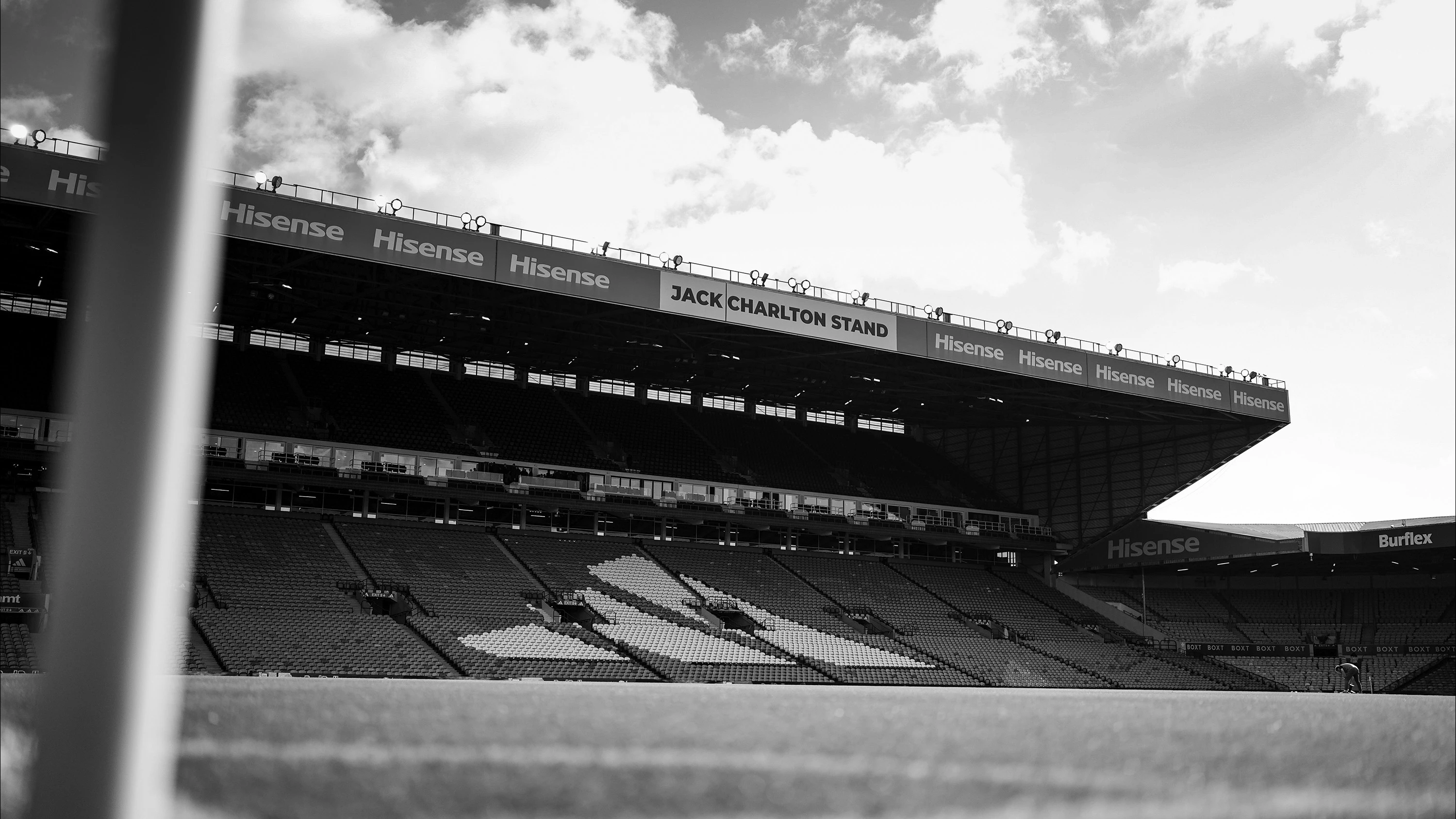
Prior to kick-off yesterday, Elland Road fell silent as The Last Post was played, allowing us take a moment to remember and honour the servicemen and women who made the ultimate sacrifice for our country in armed conflict.
During the Second World War alone, an estimated 384,000 Brits lost their lives in combat, including five Leeds United players who called this very stadium home.
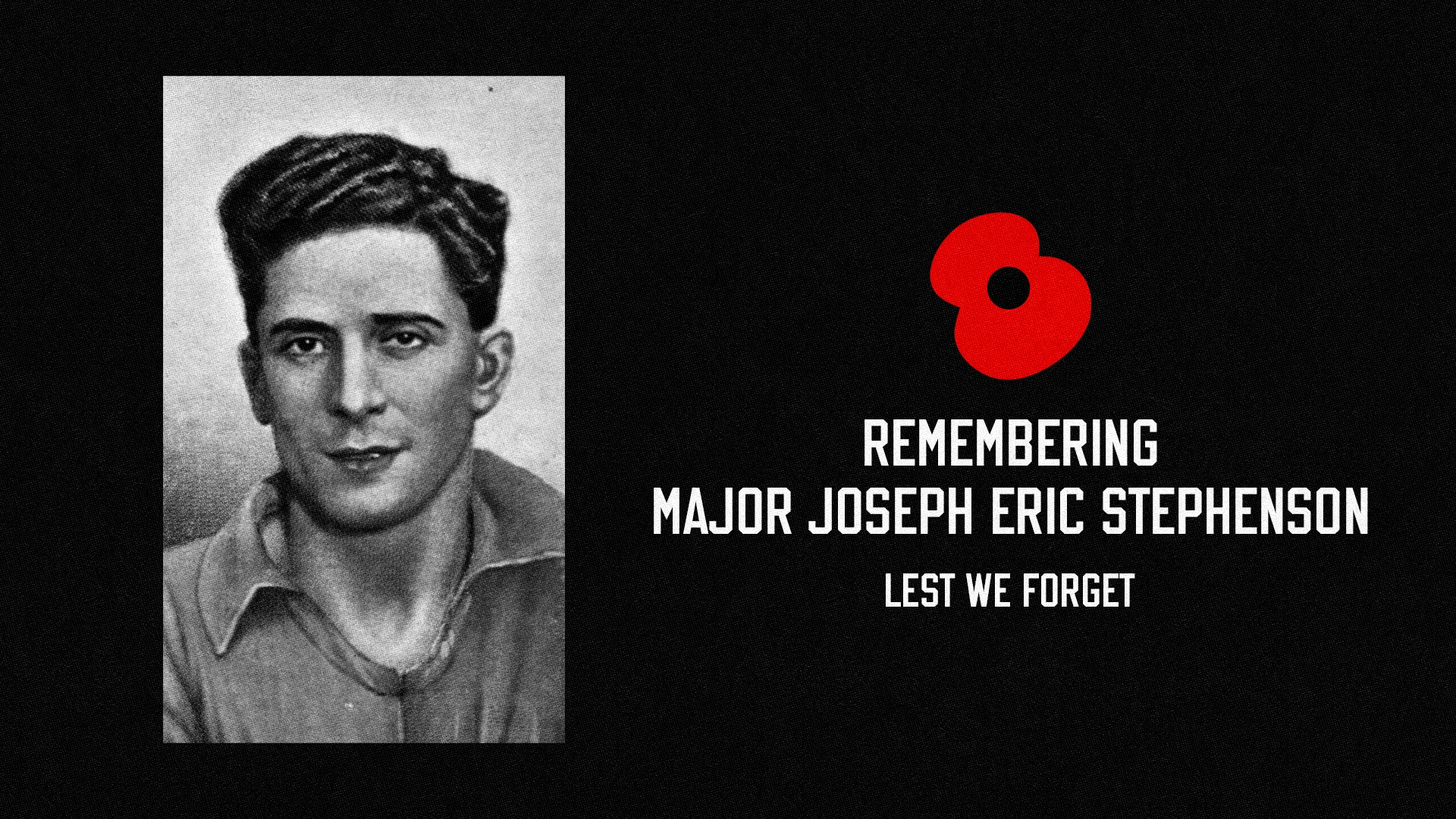
Perhaps the most well known was England international Joseph Eric Stephenson, who went by Eric. Regarded as a highly-rated prospect in his school days, Stephenson left East London’s Leytonstone when his family moved to Leeds for work. The teenager had already represented the capital’s schoolboy side in the annual match against their Glasgow counterparts, contributing to a Hampden Park win in 1930.
Very quickly his talents had been spotted in West Yorkshire. Joining a side in Harrogate was just the start. The ground was also used by one of Leeds' reserve teams. After an invite, Eric signed for the Whites as an amateur in 1933 before penning a professional deal in September of the following year, on the day he turned 20. With forward Billy Furness spending a period on the sidelines through injury, Stephenson was given the nod and made his Leeds United debut shortly afterwards. In just his second match, the attacker netted a brace in a thrilling 4-4 draw with Everton at Goodison Park, proving himself more than worthy of deputising in the England international’s absence.
Across the 1935/36 season, the youngster continued to develop as he shadowed the more experienced Furness before earning a starting berth the following year as a change to the system saw the duo occupy either flank. The move worked; Eric scored four goals in 17 games donning the no.10 jersey, ultimately finishing with six for the term in 22 outings before his team-mate moved to pastures new.
Now one of the first names on the team sheet, the Bexleyheath-born forward became part of a formidable trio alongside Gordon Hodgson and David Cochrane that come February of 1937 had Leeds in the hunt for a first ever top-flight title. In an era before the introduction of international breaks, a player’s success could also be detrimental to his club and so this proved the case. Eric missed a crucial defeat by Arsenal in April to win the first of two England caps, starting as an inside left against Scotland at Wembley. United eventually finished nine points adrift of the Gunners in the final standings.
Netting twice against Arsenal the following campaign at Highbury helped him back into the Three Lions side for a 7-0 dismantling of Northern Ireland in November 1938. In his final season before the outbreak of war, Stephenson made 36 appearances in all competitions for the club and was part of the England squad that toured Italy, Yugoslavia and Romania.
Eric scored 22 goals in 115 appearances across his time with the club and was entering his prime just as the conflict began, ultimately curtailing what promised to be an illustrious professional career. The forward still featured in the Wartime League, netting seven in 32 outings.
He enlisted to serve at the start of the war and followed a path forged by many other professional footballers, using his expertise as a physical training instructor in Aldershot, the home of His Majesty’s British Army, while still playing in games that served as great morale boosts for the public. Eric even represented the Army three times against their French counterparts in 1940, months prior to the Nazi invasion, beginning with a clash at the Stade Olympique de Colombes in Paris that drew a crowd of 35,000. The Leeds star scored in both the second and third friendlies.
Enrolling in an Officer Cadet Training Unit course at the Royal Military Academy at Sandhurst, Eric was commissioned and deployed to India in 1942, serving in 2nd King Edward VII’s Own Gurkha Rifles (The Sirmoor Rifles) 3rd Battalion and reaching the rank of major.
Tasked with operating behind enemy lines in Japanese-held Burma, now Myanmar, Stephenson formed part of the Chindits, special units similar to the early Special Air Service, penetrating hundreds of miles behind enemy lines through some of the harshest conditions and terrain seen across any theatre of the conflict. Just four days after his 30th birthday, Major Joseph Eric Stephenson died on 8 September, 1944. He is buried at Taukkyan War Cemetery in Myanmar.
“To many British troops in WW2, service in Burma was the toughest ticket you could draw in the lottery of postings,” explained Professor Bob White, curator of the Kohima Museum in York, dedicated to commemorating the Burma campaign. “Out there you fought in jungle, an alien environment full of strange noises, where you could only see a few yards. Tension was constant, as you never knew if an enemy was behind the next tree, or a tiger. Men were forever dropping from diseases like malaria and they were always soaking, in rain or sweat from the stifling heat.
“For the Chindits, this misery was made much worse by having to fight deep in enemy territory. Far from safety, they could never fully relax. The Chindits marched hundreds of miles with enormous backpacks through punishing terrain. Rations came by parachute but often failed to arrive. When they finally reached their targets, the Japanese fought with frenzied savagery, but the Chindits showed they could be beaten on their own ground. One wrote afterwards, ‘We were all quite sure that, if only we got out, nothing on earth would ever have the power to worry us again’. They were mistaken and post-traumatic stress tormented many survivors. Thirty thousand British servicemen did not return from the terrible war with Japan. Among them was Eric Stephenson, one of England’s finest, who lies buried in Taukkyan War Cemetery, far from home. Let us remember his courage and sacrifice.”
An international in his prime, the outbreak of war curtailed a stellar career and ultimately cost a young man his life fighting for the freedoms we enjoy today. On 27 May 1947, Leeds United hosted Glasgow Celtic in a memorial benefit match with proceeds donated to his widow. Stephenson is immortalised in a memorial stained-glass window which can still be seen at Lidgett Park Methodist Church in Roundhay.
Eric was one of five Leeds United footballers to pay the ultimate sacrifice during the Second World War, alongside Sergeant Vernon Allen, Pilot Officer Robert Montgomery, Trooper Maurice Hubert Lawn and Sergeant Leslie Thompson.
At the going down of the sun and in the morning, we will remember them.
With thanks to the Kohima Museum, who are currently hosting a free Chindit exhibition. Image credit: Bill Hayes & the Chindit Society.